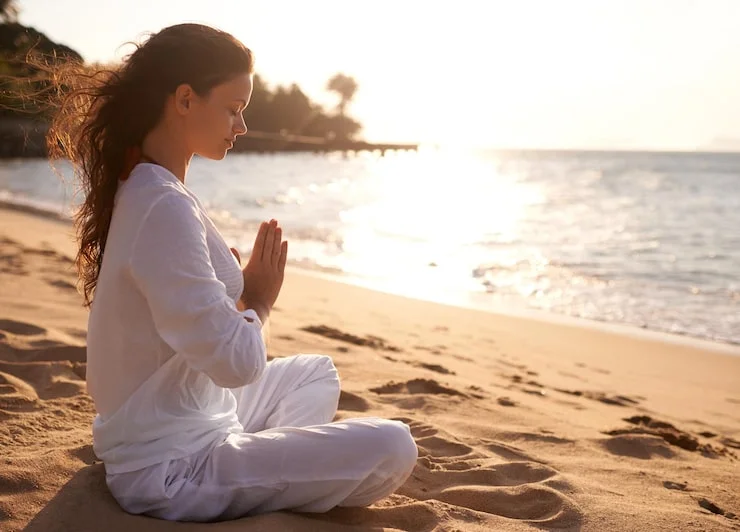
Meditation is not about emptying your mind or becoming emotionless. Many people believe that meditation means stopping all thoughts. That is not true. Meditation is the practice of noticing your thoughts and feelings without letting them control you. It is a skill you build over time, like learning to swim or ride a bike.
When you sit quietly and watch your breath, something simple happens. You start to see how your mind works. You notice how quickly it jumps from one worry to the next. You notice how often you react without thinking. Over time, this simple act of watching creates space between you and your meditation for inner peace and strength.
That space is where inner peace lives. And that space is also where strength grows.
This article will walk you through everything you need to know. You will learn what meditation does to your brain and body, how to start, which methods work best, and how to stay consistent. By the end, you will have a clear path you can follow starting today.
Before going further, let us be clear about these two words.
Inner peace does not mean you never feel upset. It means you are not shaken easily. A problem comes, and you deal with it. You do not lose sleep for a week. You do not replay the same argument in your head fifty times. You feel what you feel, and then you let it pass.
Strength does not mean you never feel afraid. It means you act even when you are afraid. It means you can sit with discomfort without running away. It means you can say no when needed and stay calm when someone disagrees with you.
Both of these come from the same place. They come from a mind that is not easily pushed around by thoughts and emotions.
Meditation builds that mind.
Read Also: Meditation Habits For Busy Professionals
Scientists have studied meditation for decades. Their findings are clear and consistent.
The amygdala is a small part of your brain that handles fear and stress. When it is overactive, you feel anxious, angry, and reactive. Studies show that regular meditation reduces activity in the amygdala. It does not disappear, and you still need it for real danger. But it stops firing at small problems.
The prefrontal cortex sits behind your forehead. It handles decision-making, focus, and self-control. People who meditate regularly show more activity in this area. This means they think before reacting. They make better choices under pressure.
The hippocampus is linked to memory and emotional regulation. Chronic stress shrinks it. Meditation helps protect it and can even help it grow new cells. This matters because a healthy hippocampus helps you stay calm and think clearly.
Your body has two main modes. One is fight-or-flight, which kicks in during stress. The other is rest-and-digest, which helps you heal and recover. Most people spend too much time in fight-or-flight. Meditation activates the rest-and-digest mode. Your heart rate slows. Your breathing becomes steady. Your muscles relax.
Cortisol is your main stress hormone. High levels over long periods damage your body and mind. Research shows that meditation lowers cortisol levels. This leads to better sleep, clearer thinking, and a stronger immune system.
These changes do not happen overnight. They build slowly with practice. But they do happen. Even ten minutes a day can start the process.
Let us look at how these two qualities show up in daily life.
Imagine you get a message from your boss saying she wants to talk. Your first reaction is fear. Your heart races. Your mind jumps to worst-case scenarios. You start imagining getting fired.
Without meditation, you would spend the whole day in this state. You would snap at your family. You would not sleep well. You would walk into the meeting already defeated.
With meditation, the fear still comes. But you notice it. You see the thoughts for what they are: thoughts, not facts. You take a few slow breaths. You tell yourself you do not know what she wants yet. You stay present. You walk into the meeting calm and ready.
That is inner peace. The fear came, but it did not take over.
Now imagine the meeting goes badly. She criticizes your work. Your first instinct is to defend yourself or shut down. But because you have practiced sitting with discomfort, you can stay open. You listen. You ask questions. You do not take it personally. You leave the room with your dignity intact.
That is strength. You faced something hard without falling apart.
Both of these come from the same practice.
You do not need special equipment, a fancy cushion, or hours of free time. You need a quiet spot and a few minutes.
Morning works best for most people. Your mind is fresh, and nothing has gone wrong yet. But any time works. The key is to make it a habit. Pick a time and stick with it for at least two weeks.
Sit in a chair or on the floor. Keep your back straight but not stiff. You can close your eyes or keep them softly open. You do not need a special room. A corner of your bedroom is fine.
Start with five minutes. Yes, five. Do not try to do thirty minutes on day one. You will get frustrated and quit. Five minutes is enough to begin. Add one minute every few days until you reach twenty.
Bring your attention to the feeling of your breath. Notice it entering your nose. Notice your chest rising. Notice your belly moving. Do not control the breath. Just watch it.
Your mind will wander. This is not a problem. It is part of the practice. When you notice you are lost in thought, gently bring your attention back to your breath. Do this as many times as needed. Each time you come back, you are strengthening your mind.
When the timer goes off, do not jump up. Take a few slow breaths. Notice how you feel. Then open your eyes and go about your day.
That is it. That is meditation.
You May Also Like: Mindfulness Meditation For Beginners At Home
Many people give up before they begin because of wrong ideas. Let us clear them up.
You cannot stop thinking. The brain produces thoughts the way the heart produces beats. Meditation is not about stopping thoughts. It is about not getting caught in them.
There is no such thing as being bad at meditation. If you sat down and noticed your mind wandered, you did it right. Noticing is the practice.
Most people feel calmer after one session. The effects get stronger over weeks and months. But you will notice something on day one.
You have five minutes. Everyone does. You can meditate while waiting for coffee to brew or before you check your phone in the morning.
Meditation comes from many traditions, including Buddhism and Hinduism. But the practice itself is not tied to any religion. People of all beliefs and no beliefs meditate. It is a mental exercise, not a prayer.
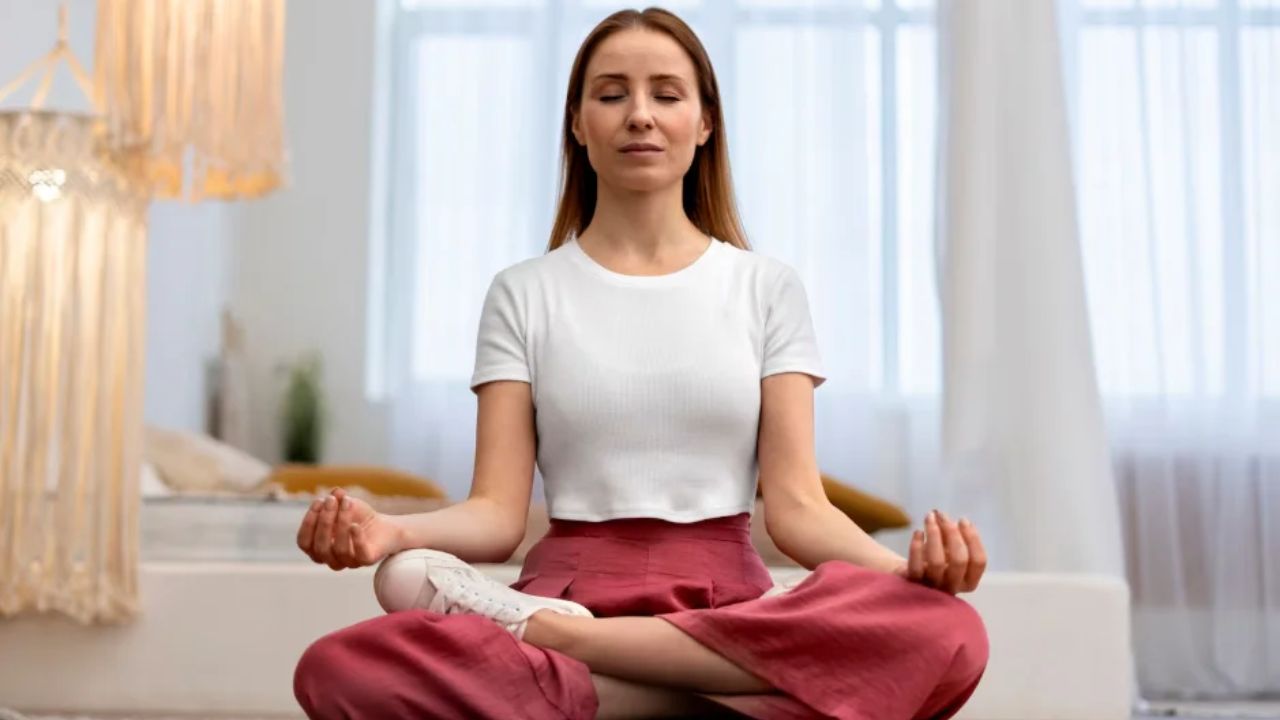
There are many ways to meditate. Different methods work for different people. Try a few and see what meditation for inner peace and strength.
This is the simplest form. Sit quietly and watch your breath. When your mind wanders, bring it back. That is the whole practice.
Breath awareness builds focus and calm. It is perfect for beginners because it requires nothing but your attention.
Do it for five to twenty minutes a day.
Lie down or sit comfortably. Bring your attention to your feet. Notice any sensations there. Slowly move your attention up through your legs, hips, stomach, chest, arms, neck, and head. Do not judge what you feel. Just notice.
This practice helps release tension stored in the body. It is great for people who carry stress in their shoulders or jaw. It also helps with sleep.
Do it for ten to thirty minutes, especially before bed.
Sit quietly and bring someone to mind. It can be yourself, a loved one, or even someone you find difficult. silently wish them well. Use simple phrases like:
May you be happy.
May you be healthy.
May you be safe.
May you live with ease.
This practice builds warmth and patience. It softens anger and resentment. It is one of the fastest ways to feel more connected to others.
Do it for ten to fifteen minutes.
In this practice, you imagine a calm and safe place. It could be a beach, a forest, or a quiet room. You picture it in detail. You imagine the sounds, smells, and feelings.
Visualization is powerful for reducing anxiety. It gives your mind a break from worry. It also helps you rehearse calm responses to future challenges.
You can find guided versions online or do it on your own. Ten to twenty minutes works well.
A mantra is a word or phrase you repeat silently. It can be a sound like "Om" or a phrase like "I am calm." The point is to give your mind something steady to hold onto.
Mantra meditation is easy for people who struggle with silence. The repetition settles the mind quickly.
Do it for ten to twenty minutes.
You do not have to sit still. Walking meditation means paying full attention to the act of walking. Notice your feet touching the ground. Notice your breath. Notice the air on your skin.
This is great for people who feel restless sitting still. It also fits easily into a busy day. You can do it on your way to work or during a lunch break.
Do it for ten to thirty minutes.
In this practice, you do not focus on one thing. Instead, you notice whatever arises. A sound, a thought, a feeling. You watch it come and go without grabbing onto it.
This is more advanced. It builds deep equanimity, which means staying calm no matter what happens. It is powerful but can feel strange at first. Try it after you are comfortable with breath awareness.
Do it for fifteen to thirty minutes.
Starting is easy. Staying consistent is hard. Here are practical ways to keep going.
Pick something you already do every day. Brushing your teeth. Drinking coffee. Waking up. Then attach meditation to it. "After I brush my teeth, I meditate for five minutes." This uses an existing habit as a trigger for the new one.
Five minutes every day beats thirty minutes once a week. Consistency matters more than length. Once five minutes feels easy, add a few more.
Some sessions will feel calm. Some will feel messy. Both count. The goal is not to feel good during meditation. The goal is to show up.
A timer frees you from checking the clock. An app can guide you if you are new. Just do not let the app become a distraction. The practice is the point, not the app.
Mark an X on a calendar each day you meditate. Watching the chain grow motivates you to keep going. Missing one day is fine. Missing two in a row makes it easier to quit.
You will miss a day. Maybe several. That is normal. Do not turn it into a story about failure. Just start again the next day.
You May Also Like: Benefits Of Meditation For Busy Professionals
Every meditator runs into obstacles. Here is how to work through the most common ones.
This is the most common complaint. And it misses the point. You are not trying to quiet the mind. You are trying to notice it. A busy mind is not a problem. It is the material you work with.
When thoughts come, label them gently. "Thinking." Then return to your breath.
Sleepiness happens for two reasons. Either you are tired, or you are bored. If you are tired, try meditating earlier in the day. If you are bored, try walking meditation or open your eyes.
You can also splash cold water on your face before sitting. Or sit up straighter.
Sometimes sitting still brings up feelings you have been avoiding. This can feel scary. If it happens, do not force yourself to push through. Open your eyes. Take a few slow breaths. Ground yourself by feeling your feet on the floor.
If anxiety keeps coming up, shorten your sessions. Or try guided meditation with a calming voice.
You do not need a lot of time. You need a little time, consistently. Five minutes before your shower. Three minutes while your tea steeps. Ten minutes in your car before going into work.
If you wait for the perfect moment, it will never come.
Results come slowly. You might not notice changes for a few weeks. But others might. They may say you seem calmer. They may notice you do not react as quickly.
Trust the process. The changes are happening even when you cannot see them.
This is a fair question. Here is what you can expect.
Day one: You will feel a bit calmer after your session. This may last an hour or two.
Week one: You may notice you sleep better. You may catch yourself reacting less quickly. Small things.
Week four: People around you may notice changes. You feel more steady. Stressful situations do not hit as hard.
Month three: The changes become part of who you are. You handle problems with more ease. You recover from setbacks faster.
Year one: Your baseline state shifts. You are calmer by default. Inner peace becomes less of something you chase and more of something you live in.
These are rough guides. Everyone moves at their own pace. The key is to keep going.
Let us talk more about strength. It is the part people often overlook.
Meditation is not passive. Sitting with discomfort is hard. Watching your thoughts without acting on them takes effort. Every time you do it, you build a kind of muscle.
This muscle shows up in real life.
You can stay calm when someone yells at you.
You can say no without guilt.
You can sit with sadness without needing to fix it.
You can face uncertainty without panicking.
You can hold your ground when others push you.
This is not about becoming cold or detached. It is the opposite. When you are not controlled by your emotions, you can feel them fully without being ruled by them. You can be present with others. You can respond with care instead of reacting from fear.
That is real strength.
Inner peace is not the absence of problems. It is the ability to be okay even when problems exist.
Meditation teaches you that thoughts come and go. Feelings come and go. Nothing stays forever. When you truly understand this, you stop clinging to good moments and resisting bad ones. You let life flow.
This does not mean you stop caring. It means you stop fighting reality. You deal with what is in front of you without adding extra suffering.
That is inner peace.
Here is a simple plan you can follow for the next thirty days.
After thirty days, you will have a habit. From there, you can explore other methods and extend your time.
Start with five minutes. Work up to twenty. Research shows benefits at ten minutes a day. More is fine if you have time, but consistency matters more than length.
No. Meditation is a tool for mental wellness. It is not a treatment for mental illness. If you struggle with depression, anxiety, or trauma, please see a professional. Meditation can support therapy, but it does not replace it.
No. You can sit in a chair, on a couch, or lie down. The position matters less than keeping your back straight and staying awake.
You cannot stop thinking. That is not the goal. The goal is to notice when you are thinking and gently return to your focus. Every return is a repetition that builds your skill.
Morning is usually best because your mind is fresh and distractions are few. But any time works. The best time is the time you will actually do it.
Yes. Meditation helps you notice anger before it takes over. You still feel it, but you have a choice about how to respond. Over time, anger loses its grip on you.
You will feel some calm after one session. Deeper changes take weeks and months. Be patient.
Nothing happens. Just start again the next day. Missing one day is not a problem. Quitting because you missed a day is.
Yes. Kids can learn simple practices like breathing or visualization. Keep sessions short, around two to five minutes for young children.
No. An app can help you start, but it is not required. All you need is a timer and a quiet spot.
Meditation for inner peace and strength is not complicated. It does not require special skills or hours of free time. It requires showing up, sitting down, and paying attention.
The practice is simple. You watch your breath. Your mind wanders. You bring it back. You do this again and again. Over time, something shifts. You become calmer. You become steadier. You become stronger.
You do not need to be perfect. You do not need to feel peaceful every time you sit. You just need to keep going.
Start with five minutes today. Sit somewhere quiet. Close your eyes. Take a breath. That is all.
Disclaimer: SPIRITUAL DEVOUT claims no credit for images featured on our blog site unless otherwise noted. All visual content is copyrighted to its respectful owners.