
Your mind races. You replay conversations from three days ago. You imagine worst-case scenarios for events that haven't happened yet. You analyze decisions you've already made, wondering if you chose wrong. If this sounds familiar, you're an overthinker. And you've probably tried meditation only to find that sitting quietly with your eyes closed makes things worse. Your thoughts get louder. You feel trapped. You quit.
Here's what nobody tells you: traditional meditation advice often fails overthinkers because it assumes a quiet mind is the goal. It's not. The goal is learning to relate to your thoughts differently. And there are specific techniques designed for minds that won't stop talking. This guide walks you through what actually meditation techniques for people who overthink.
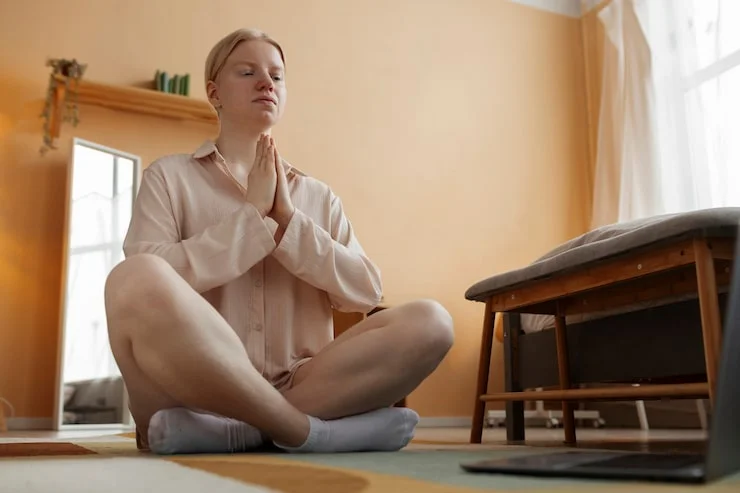
Overthinking isn't a character flaw. It's not proof that something is wrong with you. It's ancient survival wiring running inside a brain that's very good at telling stories . Your ancestors needed to anticipate threats, replay dangerous encounters, and plan for scarcity. That same system now runs on modern problems: emails, relationships, social media, and endless choices.
The problem is that this system doesn't have an off switch. And the modern world gives it more material than ever. More options mean more open loops. Each unresolved thought becomes something your brain keeps circling back to .
What makes overthinking so hard to catch is that it feels productive. It wears the costume of problem-solving. You tell yourself you're being diligent, careful, responsible. But there's a key difference between thinking that generates a next step and thinking that just generates another lap . Overthinking is the second kind. It's a mental treadmill. You're moving, but you're not going anywhere.
Read Also: Meditation For Inner Peace And Strength
Most meditation guides tell you to clear your mind, focus on your breath, and let thoughts pass like clouds. For someone whose mind is a thunderstorm, this advice backfires. Trying to clear your mind when your mind won't clear feels like failure. You end up judging yourself for being bad at meditation, which adds another layer of stress on top of the stress you were trying to address.
A common myth is that meditation requires emptying your mind. This myth stops people from trying or sticking with it . The truth is that thoughts will keep coming. That's what brains do. The practice isn't about stopping thoughts. It's about noticing when your mind has wandered and gently returning to your anchor without judgment .
For overthinkers, the goal shifts. You're not trying to achieve a blank mind. You're building the skill of noticing. You're learning to catch the moment your thoughts take over and choose where to place your attention. That skill, practiced over time, changes your relationship with your own mind.
Start here. Not because it's the most powerful technique, but because it's the most accessible. One minute. That's it. One minute of your day. You can spare that.
Here's how it works. Set a timer for sixty seconds. Sit however feels comfortable. Close your eyes or soften your gaze. Breathe in through your nose. Breathe out through your mouth. Your mind will wander. That's expected. When you notice it has wandered, bring your attention back to your breath. That's the entire practice .
The point isn't to have a perfect minute of focus. The point is to practice the return. Each time you notice your mind has drifted and you bring it back, you're strengthening a mental muscle. You're training your brain to recognize when it's lost in thought and to choose something else.
The myth that you need twenty minutes a day stops many people before they start. Research and clinical experience suggest the opposite. Consistency matters more than duration. Meditating for one minute every day builds more skill than meditating for twenty minutes once a week . Start with one minute. When that feels manageable, try three. Then five. There's no rush.
Overthinkers often get tangled in their thoughts because they treat them as facts. A worry feels urgent. A self-critical thought feels true. Labeling creates distance.
When you notice your mind has gotten caught up, silently name what's happening. "Planning." "Worrying." "Remembering." "Criticizing." That's it. You're not analyzing the thought. You're not arguing with it. You're just noting what kind of thought it is .
This simple act of naming activates the prefrontal cortex, the part of your brain responsible for emotional regulation . It moves you from being inside the thought to observing it. You're not your thoughts. You're the one noticing them.
Overthinkers often fall into the trap of trying to think their way out of a negative feeling. This is like digging to get out of a hole. You can't solve a feeling with more thinking . Labeling interrupts this cycle. It gives you a way to acknowledge what's happening without getting pulled deeper in.
When overthinking spirals into anxiety, thinking alone won't bring you back. You need your senses. The 5-4-3-2-1 technique pulls your attention from the abstract world of thoughts into the physical world around you.
Here's how it works. Name five things you can see. Four things you can touch. Three things you can hear. Two things you can smell. One thing you can taste . Go slowly. Actually look at what's around you. Actually feel the texture of your clothes or the surface beneath you.
This technique works because your brain can't fully process sensory input and rumination at the same time. They compete for the same resources . When you deliberately engage your senses, you interrupt the worry loop and bring yourself back to the present moment. It's especially useful during acute anxiety or panic, when your thoughts feel completely out of control .
Overthinking lives in your head. A body scan brings you back into your body. It's a way of moving awareness from the mental to the physical.
Take two or three minutes. Start at the top of your head. Slowly move your attention down through your body. Notice your forehead, your jaw, your shoulders, your chest, your belly, your legs, your feet. You're not trying to change anything. You're just noticing what's there. Tension. Discomfort. Warmth. Whatever you find .
This practice builds what researchers call interoceptive awareness, the ability to perceive internal bodily sensations. This awareness plays a key role in emotion regulation. By observing bodily sensations without trying to fix them, you develop greater tolerance for discomfort and reduce reactivity . Overthinkers often live entirely in their heads. The body scan is a way home.
Sitting still can feel impossible when your mind is racing. Walking meditation gives you somewhere for that restless energy to go.
Walk at a slow, natural pace. Pay attention to the physical sensations of walking. The feeling of your feet meeting the ground. The shift of weight from one leg to the other. The movement of your arms. The air on your skin. When your mind wanders, bring it back to these sensations .
Walking meditation integrates mindfulness with movement, creating a dual task that disrupts automatic thinking patterns . Your brain shifts from abstract rumination to embodied awareness. Studies link mindful walking to reductions in depressive symptoms and improved executive function, especially for people prone to rumination .
You can do this anywhere. Walking to your car. Walking around your neighborhood. Walking from your desk to the bathroom. The practice isn't about where you walk. It's about where you place your attention.
Meditation doesn't require a cushion or a quiet room. You can practice during ordinary activities. Washing dishes. Brushing your teeth. Taking a shower. Drinking coffee.
Pick a routine task. As you do it, bring your full attention to the sensory experience. If you're washing dishes, feel the warm water on your hands. Notice the texture of the soap. Hear the sound of water running. If you're drinking coffee, notice the warmth of the cup, the smell, the taste .
This transforms autopilot moments into grounding rituals. It's ideal for people who struggle with sitting meditation because it weaves practice into life rather than adding another task to your day .
Sometimes thoughts loop because they have nowhere else to go. Writing them down externalizes them. It gives your brain permission to let go.
Set a timer for five minutes. Write down the thoughts that have been circling. Don't edit. Don't try to solve anything. Just get them out of your head and onto the page. When the timer ends, close the journal. Do something enjoyable or neutral .
This practice reduces cognitive load. Your brain doesn't have to keep rehearsing the thoughts because they're safely recorded. You can also create a "worry window" once a day. Fifteen minutes where you allow yourself to write down worries and concerns. Outside that window, when worries show up, you postpone them. You tell yourself, "I'll deal with that during my worry time" .
Overthinking often gets worse when there are too many choices. Each option becomes an open loop. Your brain keeps circling, trying to find the perfect answer. But the paralysis usually lives in the extra options, not in the decision itself .
When you're stuck on a decision, deliberately cut your options down. Two. Maybe three. Give yourself permission to stop considering the rest. You can always reconsider later, but for now, you're working with a smaller set.
This isn't a meditation technique in the traditional sense, but it addresses a major source of overthinking. Decision fatigue feeds rumination. Limiting choices reduces the material your mind has to work with.
Read: Meditation Techniques For Emotional Healing
Your first attempts at meditation will probably feel frustrating. Your mind will wander constantly. You'll wonder if you're doing it wrong. You'll want to quit.
This is normal. It happens to everyone. The wandering mind isn't a sign of failure. It's part of the practice . Each time you notice your mind has drifted and you bring it back, you're doing the work. The return is the practice.
Don't expect to feel calm immediately. Meditation isn't a quick fix. The benefits build over time. A six-day mindfulness retreat produced mental health benefits comparable to longer eight-week programs, with significant improvements in well-being, negative affect, and rumination . But you don't need a retreat. Daily practice, even short sessions, creates change.
Some days will feel easier than others. Some sessions will feel pointless. Keep showing up anyway. The consistency matters more than any single session.
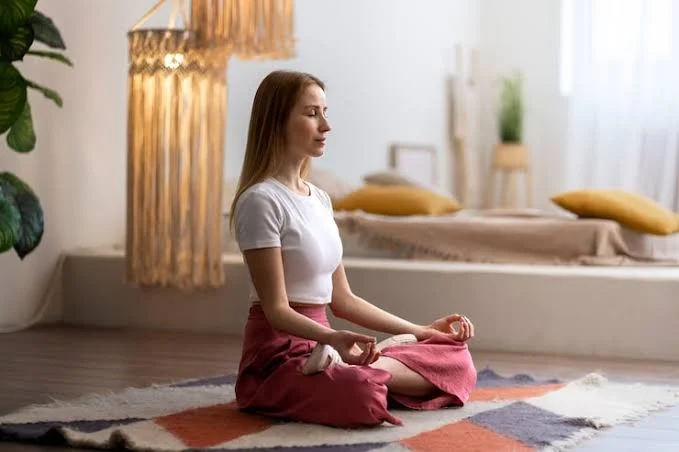
The biggest obstacle to a lasting meditation practice is unrealistic expectations. If you think you need to meditate for thirty minutes in perfect silence, you'll quit the first time life gets busy. If you think your mind should be quiet, you'll judge yourself every time it wanders.
Start small. One minute. Attach it to something you already do. After brushing your teeth. Before opening your laptop. While your coffee brews. Habit stacking makes meditation a natural extension of your routine rather than another task to remember .
Create a backup version for hard days. One slow breath. Noticing five sounds. Feeling your feet on the ground for ten seconds. Having an ultra-simple fallback keeps you connected to the practice even when everything feels meditation techniques for people who overthink.
Focus on returning, not perfect streaks. Every practice includes pauses and lapses. Missing a day doesn't mean you've failed. It means you're human. The goal is to come back .
Meditation is a tool, not a cure. If overthinking interferes with your daily life, if it disrupts your sleep, if it affects your relationships or your ability to function, consider talking to a professional. Overthinking isn't a recognized mental health condition, but it can be a symptom of anxiety or depression . Cognitive behavioral therapy has strong evidence for helping people change unhelpful thought patterns .
Meditation can support that work. It's not a replacement for treatment when treatment is needed.
Not exactly. Anxiety is an emotional and physical response to a perceived threat. Overthinking, or rumination, is a mental habit that often accompanies anxiety but can also happen on its own .
Because telling yourself to stop is still more activity in the same brain network doing the overthinking. Shifting attention to something sensory or task-focused works better than arguing with the thought .
As long as you can. Even one minute counts. Consistency matters more than duration . Start with one minute and build from there.
That's expected. The goal isn't to stop thoughts. The goal is to notice when your mind has wandered and return to your anchor. Each return strengthens the skill .
It can feel that way at first. Sitting quietly with a racing mind can be uncomfortable. But that discomfort isn't a sign that meditation doesn't work for you. It's a sign that you're building a new skill. If a particular technique makes things worse, try a different one. Walking meditation or sensory grounding may work better than seated breath practice for some people.
Daily practice builds skill faster, but missing days doesn't erase progress. The goal is consistency over time, not perfection .
Overthinking isn't a flaw you need to fix. It's a pattern you can learn to work with. Meditation won't stop your thoughts. It will change your relationship to them. You'll learn to notice when you're caught in a loop and choose where to place your attention.
Start with one minute. Pick one technique from this guide. Try it for a week. If it doesn't fit, try another. The goal isn't to become a perfect meditator. The goal is to give your mind a way out of the loop.
Disclaimer: SPIRITUAL DEVOUT claims no credit for images featured on our blog site unless otherwise noted. All visual content is copyrighted to its respectful owners.