You feel heavy. You feel worried. Your mind runs fast. Your body feels tired. You want relief. You want quiet. You want to feel normal again. This is a guide for 30 minute guided meditation for anxiety and depression.
It is about a 30 minute meditation. It is made for people with anxiety. It is made for people with depression. It is not a cure. There is no cure for these things. But there are tools. This is one tool. Some people think meditation is for monks. They think it is for people who have no problems. That is not true. Meditation is for regular people. It is for people who cry. It is for people who cannot sleep. It is for people who worry about everything. You can do this. You do not need to be special. You do not need to be calm. You just need to try.
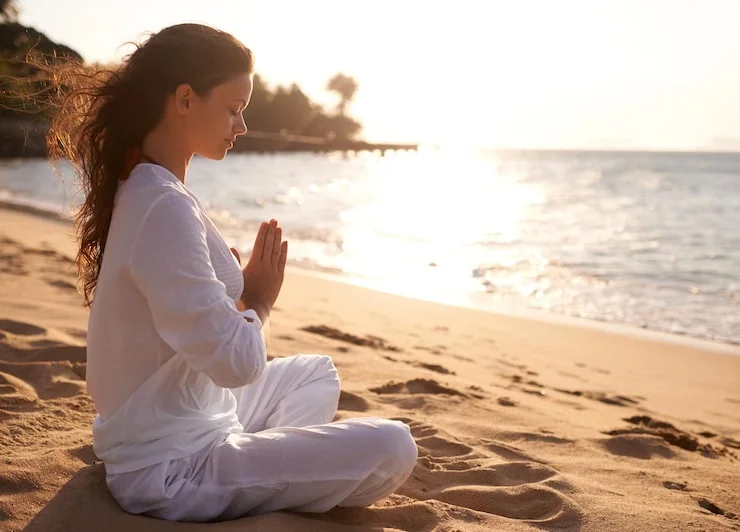
Pick a spot in your home. It does not have to be perfect. It can be your bedroom. It can be your living room. It can be a corner of your kitchen. You just need to sit down. The spot should be quiet. But you do not need complete silence. The world makes noise. That is fine. You can hear the noise. You just do not get lost in it. Make sure you will not be interrupted. Tell people you need 30 minutes. Put your phone away. Turn off the TV. This is your time. You are allowed to have this time.
Read Also: 5 Minute Meditation For Overthinking
Wear comfortable clothes. Take off your shoes. Take off your belt. Take off your watch if it feels tight. You want to feel free. Your clothes matter more than you think. Tight clothes pinch. Pinching hurts. Hurting distracts. You want to be distracted less.
You can sit on a chair. You can sit on the floor. You can sit on a cushion. You can even lie down. But if you lie down, you might sleep. Sleeping is not meditation. Meditation is being awake. It is being aware. If you choose to sit, sit up straight. But do not be stiff. Think of a string pulling the top of your head up. Your back is straight. Your shoulders are relaxed. Your hands rest on your legs.
Your eyes can be closed. Or they can be open. If they are open, look at the floor. Do not look around the room. Looking around makes your mind busy.
Close your eyes. Take a normal breath. Do not force it. Just breathe in. Just breathe out. Now bring your mind to your feet. Just your feet. What do you feel? Do your feet touch the floor? Do your feet touch your shoes? Do your feet feel warm or cold? Do your feet feel heavy or light?
Just notice. Do not change anything. Do not try to feel something different. Just notice what is there. Now move your mind to your legs. Feel your legs. Do they feel tight? Do they feel relaxed? Do they feel heavy against the chair? Just notice. Move your mind to your belly. Feel your belly. Does it move when you breathe? Does it feel tight? Many people with anxiety feel tight in their belly. It is okay. You are just noticing.
Move your mind to your chest. Feel your chest. Does it feel heavy? Does it feel empty? People with depression often feel heavy in their chest. It is okay to feel that. You are not trying to fix it. Move your mind to your hands. Feel your hands. Are they warm? Are they cold? Are they shaking? Just notice.
Move your mind to your shoulders. People hold stress in their shoulders. Are your shoulders up near your ears? Are they down and relaxed? Just notice. Move your mind to your jaw. Many people clench their jaw. Do you feel clenching? Just notice. Move your mind to the top of your head. Feel the top of your head. Feel the air there. You have just done a body scan. You traveled through your body. You gave attention to every part. This is the first step.
Now you focus on the breath. The breath is always there. It is with you from birth to death. It is a friend.
Pick one spot on your body. Pick the spot where you feel the breath most. Some people feel it in the nose. The air goes in and out. Some people feel it in the chest. The chest goes up and down. Some people feel it in the belly. The belly expands like a balloon. Pick one spot. Just one. Put your mind there.
Now feel each breath. Feel the air go in. Feel the air go out. In. Out. In. Out. Your mind will wander. This is what minds do. All minds do this. It does not mean you are bad at meditation. It means you have a normal mind. When you notice your mind has wandered, bring it back. Bring it back to the breath. Do not get mad. Do not call yourself names. Just bring it back.
Think of the breath like a little dog. The dog runs away. You do not yell at the dog. You call the dog back gently. You say "come here." The dog comes back. Then it runs away again. You call it back again. This is what you do with your breath.
This part takes the longest. It is about ten minutes. It is about your thoughts.
In the last part, you focused on the breath. In this part, you still notice the breath. But you also notice thoughts. They will come. They always come. When a thought comes, do not push it away. Do not hold onto it. Just watch it.
Think of a river. The water moves. Leaves float on the water. Your thoughts are leaves. You are sitting by the river. You watch the leaves float by. You do not jump into the water. You do not grab the leaves. You just watch them go. For people with anxiety, the leaves might be scary thoughts. Thoughts about the future. Thoughts about bad things happening. For people with depression, the leaves might be heavy thoughts. Thoughts about the past. Thoughts about not being good enough.
Let them float by. You are not your thoughts. You are the one watching the thoughts. This is important to know. Sometimes you will get caught up in a thought. You will forget you are meditating. You will start thinking about work. Or about an argument. Or about a worry. This is okay. When you notice you are caught, let go. Come back to the river. Come back to watching.
Now you use your imagination. This part is called visualization. Some people like this part. Some people do not. That is okay. Try it anyway. Put your attention on your chest. Put your hand on your chest if you want. Feel the warmth of your hand. Now imagine a light in your chest. A warm light. A golden light. A gentle light. This light is healing. It is safe. It is kind.
With each breath, this light grows. It spreads into your belly. It spreads into your throat. It spreads into your arms. It spreads into your hands. The light is warm. It feels like a blanket on a cold day. It feels like a hug from someone who loves you. Now the light spreads into your whole body. There is light in your head. There is light in your feet. Your whole body is full of warm, golden light.
Now the light spreads outside your body. It makes a bubble around you. This bubble is safe. Nothing bad can get inside. You are safe inside your bubble. Stay in this bubble. Breathe in the light. Breathe out the light. Just rest.
You May Also Like: Meditation For Better Sleep Insomnia Adults
The meditation is almost over. Now you come back to the world.
Some people cry during meditation. Some people feel restless. Some people feel angry. This is normal. It is not bad. It is not a sign of failure.
When you sit quietly, feelings come up. Feelings you pushed down. Feelings you ignored. They come to the surface. This is good. It means they are leaving.
If you cry, let yourself cry. Do not stop it. Tears are not weak. Tears are energy leaving your body. Let the tears come.
If you feel restless, notice it. Restlessness is energy. Maybe you are not ready for 30 minutes. That is okay. Try 10 minutes tomorrow. Or 5 minutes. Any time is 30 minute guided meditation for anxiety and depression.
Be gentle with yourself. There is no perfect meditation. There is only meditation.
People want to know why meditation helps. There is science behind it. It is not just spiritual. It is physical.
Your brain has an alarm system. It is called the amygdala. When it senses danger, it sounds an alarm. Your body gets ready to fight or run. Your heart beats fast. Your breathing gets quick. This is called fight or flight.
For people with anxiety, this alarm is too sensitive. It goes off when there is no real danger. It goes off for small things. The body is always on alert.
Meditation calms this alarm. It tells the amygdala to relax. Over time, the amygdala changes. It becomes less reactive. You get less startled. You get less scared.
Your body has a relaxation system. It is called the vagus nerve. It runs from your brain to your body. When you take slow breaths, you activate this nerve.
This sends a signal to your body. The signal says "calm down." Your heart slows. Your blood pressure drops. Your muscles relax.
Meditation also lowers cortisol. Cortisol is a stress hormone. High cortisol is linked to anxiety and depression. When you meditate, cortisol drops. Your body rests and heals.
This means meditation is not magic. It is biology. It changes your body. It changes your brain. It works because it is real.
But it takes time. You do not do it once and feel better forever. You do it again and again. The changes build over time. Like exercise. You do not go to the gym once and get strong. You go many times. Meditation is the same.
The meditation is done. But your day is not done. You need to bring the calm with you.
Sometimes you do not have 30 minutes. Sometimes you cannot sit for that long. That is okay. Here are shorter options.
Sit down. Set a timer. Close your eyes. Breathe. Just focus on the breath. When your mind wanders, bring it back. Five minutes resets your system.
Do the body scan for five minutes. Do the breath awareness for five minutes. This gives you two parts. It is a good balance.
This is for emergencies. Stop what you are doing. Stand still. Take three breaths. On the first breath, notice how you feel. On the second breath, collect your attention. On the third breath, let go.
These short options are tools. Use them when you need them. They are not as good as the full practice. But they are much better than nothing.
Meditation is a practice. You do it. You do not do it perfectly. You just do it.
Some days will be easy. Your mind will be quiet. You will feel peaceful. Other days will be hard. Your mind will be loud. You will feel restless. Both days are okay. Both days are part of the practice.
If you have anxiety, if you have depression, you need more than one tool. You might need a therapist. You might need medication. You might need friends and family. Meditation is one tool. Use it alongside the others.
Disclaimer: SPIRITUAL DEVOUT claims no credit for images featured on our blog site unless otherwise noted. All visual content is copyrighted to its respectful owners.