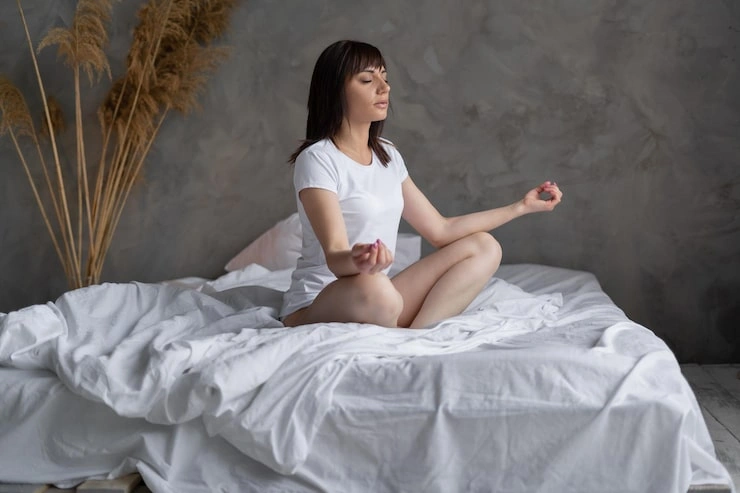
You know that feeling. You turn off the light. You close your eyes. And then it starts. Your brain wakes up. It remembers everything. That thing you said at work. The money you owe. The thing you have to do tomorrow. Your heart beats faster. Your stomach feels tight. You toss to one side. You toss to the other. You look at the clock. Two hours have passed. You get frustrated. Then you get more anxious because you cannot sleep.
I have been there. Most people have been there. It feels awful. You feel alone in the dark. Your mind runs in circles. There seems to be no way out.
But there is a way out. It does not come from a pill. It comes from something you already have. Your breath. Your attention. Your body. These are your tools. They have always been there. You just forgot how to use them.

Think about your day. You are busy from morning to night. You check your phone. You answer emails. You talk to people. You make decisions. Your brain works hard. It processes everything.
At night, all the noise stops. The phone is silent. The house is quiet. There are no more inputs. Your brain does not know what to do. So it turns inward. It looks for problems. It finds them. It brings them up one by one.
This is not your fault. Your brain is trying to help. It thinks you need to solve all these problems right now. But you do not. You need rest. Your brain does not know the difference between a real emergency and a worried thought. It treats them the same. It pumps out stress hormones. Your body gets ready to run or fight. But you are just lying in bed.
This is the cycle. Worry leads to stress. Stress leads to alertness. Alertness makes it hard to sleep. Not sleeping makes you worry more. The cycle keeps going.
Meditation cuts through this cycle. It does it gently. You do not have to force anything. You just shift your attention. You give your brain a different job. A simple job. Like watching your meditation for anxiety before bed.
Read Also: Mindfulness Meditation For Beginners At Home
I remember the first time I tried meditation. I thought it was silly. I sat there and tried to empty my mind. It did not work. Thoughts kept coming. I got annoyed. I thought I was bad at meditation.
That is not how it works. You do not empty your mind. You just notice. You notice when your mind drifts. Then you bring it back. That is the whole practice.
When you do this before bed, something shifts. Your body starts to calm down. Your breathing slows. Your heart rate drops. Your muscles let go. It is a physical change. You can feel it in your chest. In your shoulders. In your jaw.
This happens because your nervous system gets a signal. The signal says, "We are safe. We can rest." Your body believes this signal. It stops producing stress hormones. It starts producing relaxation chemicals. Your brain waves change. You move into a calmer state.
It does not happen overnight. But it does happen. With practice, your body learns this response. It gets easier. You fall asleep faster. You stay asleep longer. You wake up feeling better.
You do not need a special room. You do not need a special cushion. You do not need to sit cross-legged. You can do this right in your bed. Right now. In your pajamas. Under your blanket.
I want you to try something tonight. Just follow these steps.
Start with your face
Close your eyes. Take a breath in through your nose. Let it out through your mouth. Do this three times. Then bring your attention to your forehead. Notice if there is any tightness there. Let it go. Move to your eyes. Let them relax. Feel them sink back into their sockets. Move to your jaw. Clench it for a second. Then release. Let your mouth fall open a little. Feel the difference.
Go down to your neck
Breathe in. Imagine warm air flowing into your neck. Breathe out. Let the muscles there soften. Roll your head a little to one side. Then the other. Find a comfortable position. Let your shoulders drop. They probably sit up near your ears without you noticing. Drop them down. Let them rest.
Move to your chest and belly
Place a hand on your stomach. Feel it rise with each breath. Feel it fall. Breathe into your belly. Let your belly push against your hand. Breathe out and let it sink. Do this a few times. Notice if your chest feels tight. Let that tightness go. Breathe into it.
Let your arms relax
Feel the weight of your arms on the bed. Let them be heavy. Let your fingers curl naturally. Release any gripping you are doing. Your hands can rest open. Palms up or down. Whatever feels right.
Send relaxation to your back
Feel your back against the mattress. Let it sink in. Notice any spots that hold tension. Maybe your lower back. Maybe between your shoulder blades. Breathe into those spots. Let them soften.
Relax your legs
Let your legs feel heavy. Let them sink into the bed. Release your thighs. Release your calves. Release your feet. Let your feet fall to the sides. Let your toes relax.
Stay there
Just stay in this relaxed state. Keep breathing. If you fall asleep, that is fine. That is the goal. If you stay awake, enjoy the rest. There is no pressure. No test. No right or wrong way.
This happens to everyone. It happens to me. It happens to people who have meditated for years. Your mind is built to wander. It is what it does.
When you notice your mind has wandered, do not get mad. Do not judge yourself. Just notice where it went. Say to yourself, "Thinking." Or "Planning." Or "Worrying." Then gently bring your attention back to your body. Back to your breath.
You will do this many times. Maybe hundreds of times. That is okay. Each time you bring your mind back, you are practicing. You are building a skill. It is like lifting a weight. Each rep makes you stronger.
Some nights your mind will be very busy. Some nights it will be calmer. Both are fine. Both are meditation. Do not expect perfection. There is no such thing.
The body scan is a good place to start. But there are other ways to meditate. You might like one of these better.
Counting breaths
This is simple. Breathe in and count "one." Breathe out and count "two." Count up to ten. Then start over at one. If you lose track, start over. This gives your busy mind a job. It is like a game. Your mind focuses on the numbers. It has less room for worry.
Watching thoughts
Lie down and close your eyes. Imagine your thoughts are clouds. Or leaves floating on a river. Just watch them pass. Do not grab them. Do not follow them. Just let them go. This is hard at first. But it gets easier. You learn that thoughts are not commands. You do not have to act on them. You can just let them be.
Loving-kindness
This practice is different. You send good wishes to yourself and others. Start with yourself. Say in your mind, "May I be safe. May I be healthy. May I be peaceful. May I sleep well." Then think of someone you love. Send those same wishes to them. Then think of someone you have trouble with. Send them good wishes too. This practice calms the mind and opens the heart.
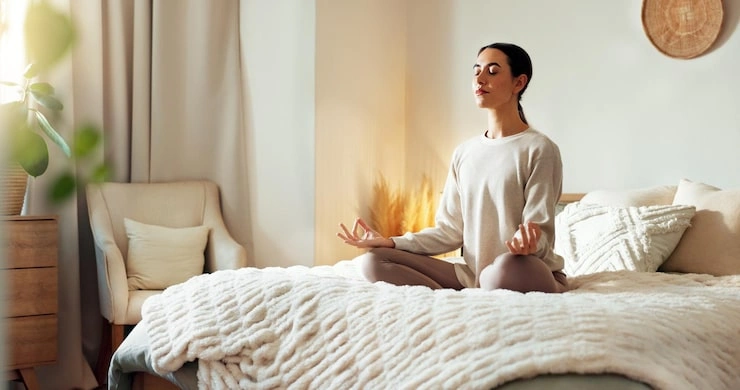
One session will help. But regular practice helps more. Think of it like brushing your teeth. You do it every day. You do not skip it. Meditation works the same way.
Try to meditate at the same time each night. This trains your brain. Your brain learns that this time means sleep. It starts to get ready. It slows down on its own.
Start small. Five minutes is enough. Do not force yourself to do twenty minutes if you cannot. Just do five. Be consistent. That matters more than the length.
Make your room comfortable. Turn off your phone. Dim the lights. Get a good pillow. Wear loose clothing. Do whatever helps you relax.
You May Also Like: Meditation For Better Sleep Insomnia Adults
You might not notice changes right away. That is normal. Meditation is not magic. It works slowly. Over weeks and months.
You might notice small things. You fall asleep a little faster. You wake up a little less often. You feel calmer during the day. You react less to stress. These are signs it is working.
Do not force it. Do not judge it. Just practice. Trust the process.
Meditation is a tool. It is a good tool. But it is not the only tool.
If you have severe anxiety, you might need more support. Talk to a doctor. Talk to a therapist. They can help you find other ways to cope. There is no shame in this. Anxiety is real. It is hard. You deserve help.
Some people benefit from therapy. Some people benefit from medication. Some people benefit from both. The right path is different for everyone.
You are trying to sleep. You are trying to rest. That is a good thing. You need rest. Your body needs it. Your mind needs it. Anxiety fights against rest. It wants you to stay alert. It wants you to stay ready. But you do not need to be ready right now. You can let go. You can relax. You can trust that your body knows how to sleep.
Meditation helps you do this. It gives you a way to step back. It gives you a way to breathe. It gives you a way to let go. Not all at once. But little by little. Night by night. Try it tonight. Lie down. Breathe. Relax your face. Relax your shoulders. Let your mind wander. Bring it back. Be kind to yourself. You are doing something good. You are taking care of meditation for anxiety before bed.
Disclaimer: SPIRITUAL DEVOUT claims no credit for images featured on our blog site unless otherwise noted. All visual content is copyrighted to its respectful owners.